
Rights of the River Medway
Rights of the River Medway: Our Successes so Far
What if a river had rights?
This question sits at the heart of a growing shift in how we understand the living world. For many Indigenous peoples across the globe, it is not a question at all but a given: rivers are living relations, with their own right to thrive. Care, in this framing, is not something granted by humans; it is a responsibility that comes from being part of a wider community of life.
In contrast, dominant Western systems have tended to separate people from nature, treating rivers as objects to be owned, engineered, and extracted from. That worldview has shaped centuries of policy, and with it, polluted waters, depleted habitats, and fractured ecological systems.
The Rights of Nature movement represents a turning point. It is now the fastest-growing legal and ecological justice movement in the world, grounded in a significant shift: nature is not property, and ecosystems are not resources. They are living systems with intrinsic rights to exist, flourish, and regenerate.
When we began this work, the rights of rivers were still seen as fringe. Today, that idea is beginning to take root in formal governance across the UK. What once felt distant is now entering council chambers, policy discussions, and legal drafting rooms. We are witnessing a turning of the tide; not only in language, but in what is considered possible. And, in the last year, our River Medway pilgrimage has helped further the conversation.
The journey: Securing acknowledgement and action for the river’s rights
Before the pilgrimage: Wealden Council acknowledges the Medway
Working alongside Rachel Millward, co-founder of Friends of the River Medway and now Deputy Leader of the Green Party, conversations with Wealden District Council helped shift how the river is spoken about at the upper catchment level.
This led to an important milestone: Wealden District Council formally acknowledging the rights of the River Medway ahead of the pilgrimage. While not yet legal recognition, this moment signalled a meaningful shift in institutional language: from viewing the river purely as a managed resource, toward recognising it as a living presence with standing in civic discourse.
The pilgrimage: walking source to sea
The pilgrimage followed the full length of the Medway, from her source in the High Weald to the Thames Estuary, moving with the river as one continuous living system. It brought together our three streams of work: Practical, Legal, and Sacred.
At the heart of the pilgrimage was a public conference we convened, bringing together councillors from across the entire catchment for the first time in a shared space. Supported by leading legal experts, the discussions explored the Rights of Rivers framework in depth: what it means in practice, how it is already being applied internationally, and what forms it might take within local UK governance.
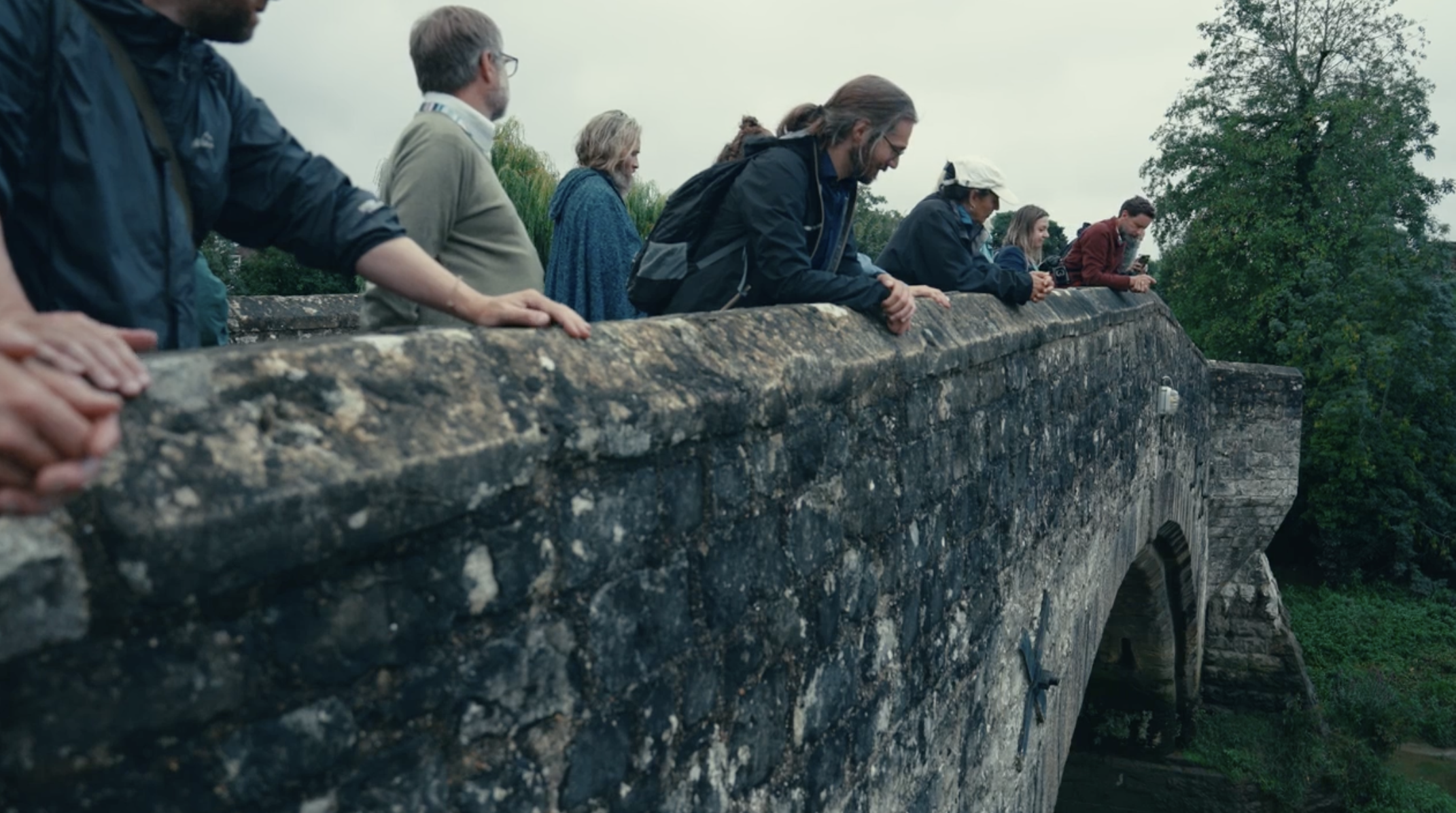
Though no formal decisions were made that day, there was a shared sense of momentum; the recognition that something was beginning to take shape. Councillors were invited to make individual pledges for the river at Aylesford Bridge - personal commitments grounded in their role as decision-makers within the catchment - and we waited to see what might take root.
After the pilgrimage: Maidstone's Rights of Nature Bill
Thankfully, the conference did not end with words. Maidstone Borough Council, energised by the dialogue and the momentum our campaign had built, by working on an innovative Rights of Nature Bill - the first legislation of its kind in the UK. The bill proposes formal legal protections for the Medway within the council's jurisdiction, establishing guardian roles and enforceable ecological standards. It is a landmark step, and a direct demonstration of what becomes possible when communities, experts, and elected representatives come together around a shared commitment to their river. Find out more about the bill here.
Why these moments matter
The acknowledgement by Wealden and the bill brought forward by Maidstone represent something important: proof that communities, when they walk alongside their rivers and speak on their behalf, can shift the politics of place. Neither happened by accident. Both were the result of years of relationship-building, public education, and the simple, powerful act of turning up - on the riverbank, in the council chamber, and on the road.
Rights of nature are not a destination. They are a practice: a commitment to recognising that the living world has standing, and that we are responsible for defending it.
What comes next
With Wealden's acknowledgement and Maidstone's Rights of Nature Bill now on record, we are working toward county-wide adoption, legal challenge powers for river guardians, and national advocacy for a UK rights of nature framework. The story is just beginning.