
Meet the River
Medway.
She springs from a high wood — and wanders all the way to the Thames.
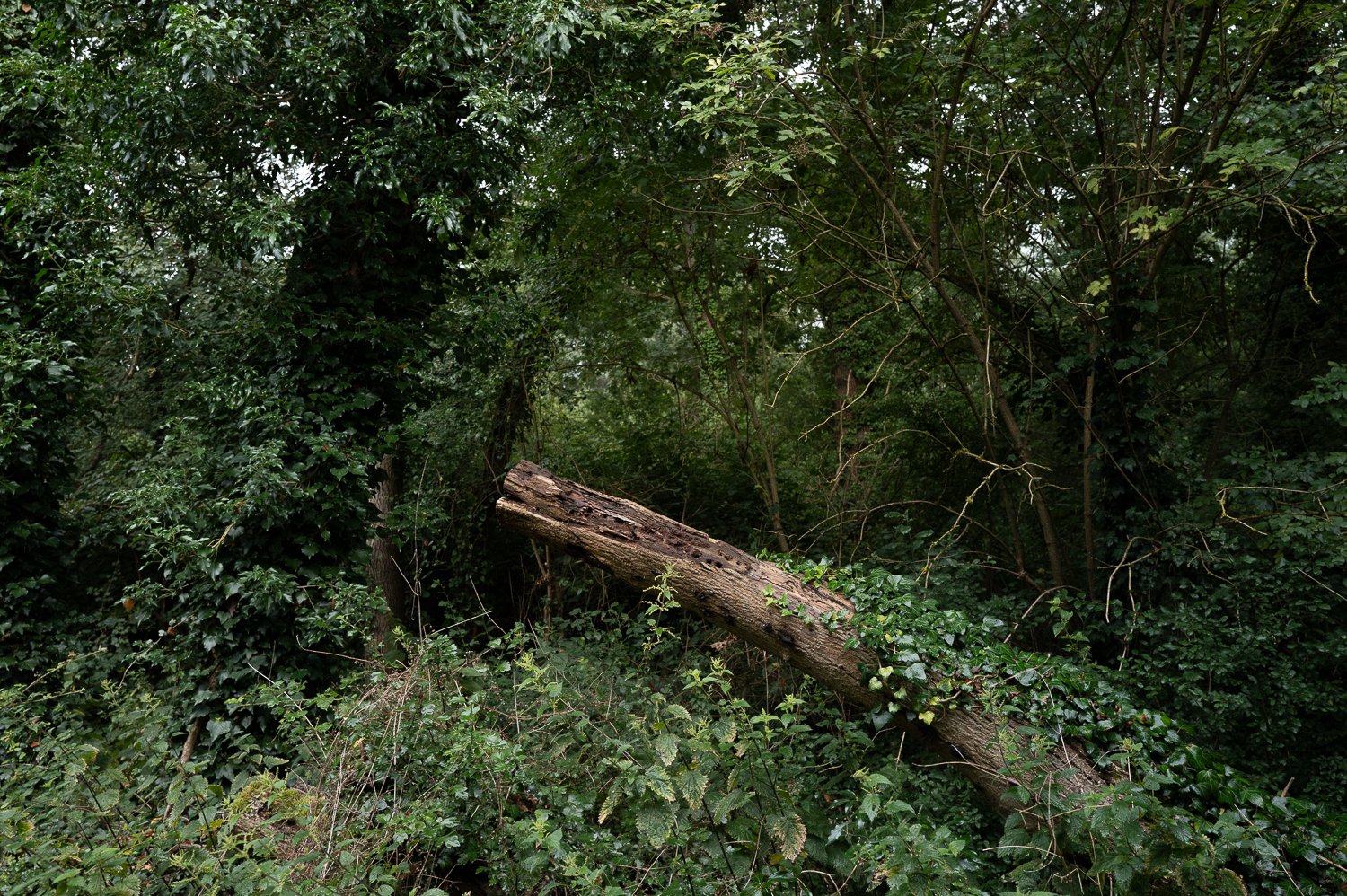
The River Medway flows through the lands known as the High Weald in South East England. The name 'Weald' comes from the West Saxon word 'Wold' — 'forest' or 'forested hill' — and it is high upon one such hill that the Medway first emerges. She springs up within a high wood in the village of Turners Hill, travelling through the different lands of Sussex and Kent for 70 miles before merging with the River Thames.
The rock of the High Weald is mainly hard sandstone and the soil mainly thick clay — virtually impermeable to water. Running water must therefore find its way across the surface of the steeply sloping land by carving deep but narrow valleys, called ghylls. These lead to a multitude of small streams, many of which form forceful flows even during the drier months. Beautiful streams can be found all over the forest ways as their courses find their route down towards the main flow of the Medway: she connects a vast network of water together.
It is the nature of sandstone, clay and soils that cause these streams to sometimes 'wander' over time. In ancient times the Britons called the river The Vaga — 'The Wandering One'. The invading Saxons later changed the name to Medvag, meaning 'middle wanderer'. Over time, a change in vowel sounds evolved the name to Medwege and eventually the Medway — 'the middle way'.
'The Wandering One' — named for the way her streams shift course through the sandstone and clay.
'Middle wanderer' — the middle perhaps associated with flowing through an established area of Saxon settlement.
'The middle way' — a slow vowel shift from Medwege, over centuries of use and change.
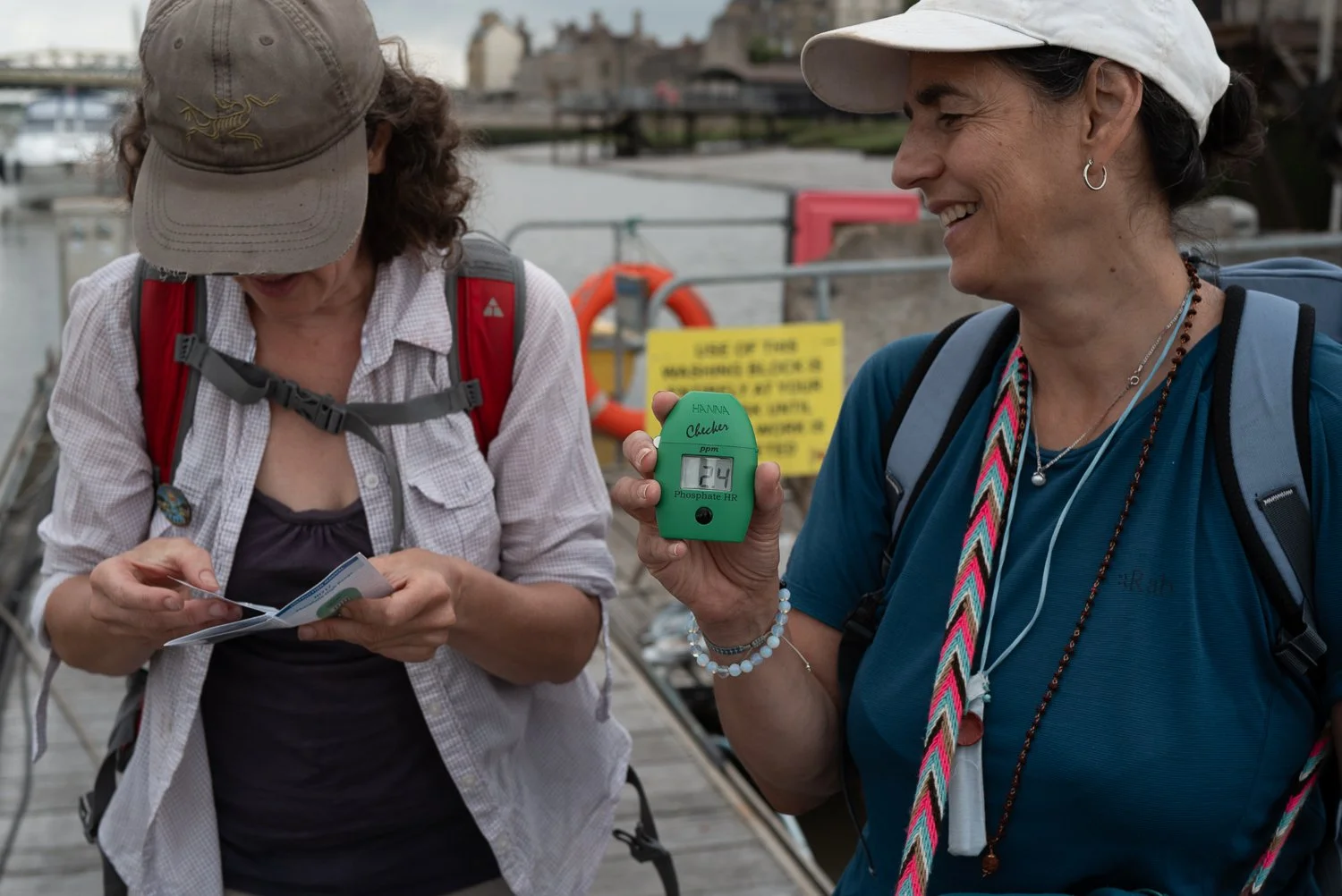
She has been at the centre of human life for thousands of years.
Her story is diverse — she has served as a stage for tales of conquest, travel adventures, and innovation. She is also home to significant ancient and prehistoric sites, evidencing the rich and dynamic history that humans have had with the River across time.
Kentish people even knew themselves as either a 'Man of Kent' or a 'Kentish Man' depending on whether they were born north or south of the Medway — showing how much she has played an important part in both the development and identity of the people who live alongside her.
Over 300 species call the Medway home
From pike to kingfisher, demoiselle to osprey — she is a living corridor of biodiversity. Before the sixteenth century, beavers waded her banks, building dams that supported the whole ecosystem. With care, much more can return.

Among the most characteristic fish of the Medway, adapted to her slow-moving stretches and weedy margins.

The critically endangered European eel still makes its extraordinary journey through the Medway's waters.

Hardy shoaling fish found throughout the river, from the upper reaches to the tidal estuary.

A shoaling silver fish and a familiar sight in the quieter stretches of the Medway.

An indicator of river health — still present in the cleaner upper stretches, and a sign of what a restored Medway could hold.

A beautiful woodland butterfly found in the ancient carr and scrub habitats along the river's banks.

One of Britain's most magnificent butterflies, found in the oak woodland canopy along the High Weald stretches.

Delicate and vivid, the common blue dances over the meadows and grasslands running alongside the river.

The river's most dazzling invertebrates — their presence a direct measure of water quality and habitat richness.

A flash of electric blue along the river's margins — the kingfisher is perhaps the Medway's most beloved resident.

Patient and still — the grey heron is a constant presence along the Medway's banks, watching and waiting.

A secretive reed-dweller, rarely seen but often heard — utterly dependent on the health of the river's edges.
Spotted during a single foray along the Upper Medway at Weirwood, 2017 — according to the Sussex Fungi Group.
Now that you know her — help us protect her.
Explore our three streams of work, join the River Guardians, or make a donation to support restoration of the Medway.